


Hormones, Fertility & Pesticides: The Invisible Threat in Indian Food
India is facing a fertility crisis. Sperm count studies in Indian men show a decline of 50–60% over the past three decades. PCOS now affects an estimated 1 in 5 Indian women of reproductive age. Thyroid disorders have doubled in incidence over 15 years. Precocious puberty — girls entering puberty before age 8 — is rising sharply in urban India. The healthcare system treats each of these as separate conditions requiring separate treatments. The evidence increasingly points to a common cause: endocrine-disrupting chemicals in the food supply.
How Endocrine Disruptors Work
Endocrine disruptors are chemicals that interfere with the body’s hormonal signalling system. The human body’s hormones — oestrogen, testosterone, thyroid hormones, insulin, cortisol — operate at extraordinarily low concentrations: billionths of a gram per millilitre of blood. At these concentrations, the body is extraordinarily sensitive to chemical mimics and blockers. Many pesticides and food adulterants are potent endocrine disruptors because they mimic or block hormone receptor binding, alter the metabolism of natural hormones, or interfere with the production of hormone-synthesising enzymes — even at very low doses.
Key Endocrine-Disrupting Chemicals in Indian Food
DDT and Organochlorine Pesticides (OC compounds)
DDT was banned in India for agricultural use in 1989, but is still legally permitted for malaria control — meaning it enters the environment and bioaccumulates in the food chain. Organochlorine compounds including HCH (Lindane), Endosulfan, Aldrin, and Dieldrin remain in Indian soil, water, and fatty tissues of livestock decades after application. OC pesticides strongly mimic oestrogen. This drives: early puberty, abnormal breast tissue development, suppressed testosterone in men, and elevated breast cancer risk.
Organophosphates (OP Pesticides)
Chlorpyrifos — found in over 80% of bottled water samples tested in India according to one study, and widely detected in vegetables — is a thyroid disruptor. OP compounds interfere with thyroid hormone synthesis and metabolism, causing hypothyroidism, goitre, and metabolic syndrome even at sub-clinical exposure levels.
Atrazine (Herbicide)
Atrazine, a herbicide widely used in maize and sugarcane production, is among the most potent oestrogen disruptors known. Even at concentrations of 0.1 parts per billion — far below most regulatory limits — atrazine has been shown to feminise male frogs by inducing aromatase (the enzyme that converts testosterone to oestrogen). In humans, dietary atrazine exposure is associated with altered menstrual cycles, reduced male fertility, and prostate cancer.
Synthetic Food Dyes
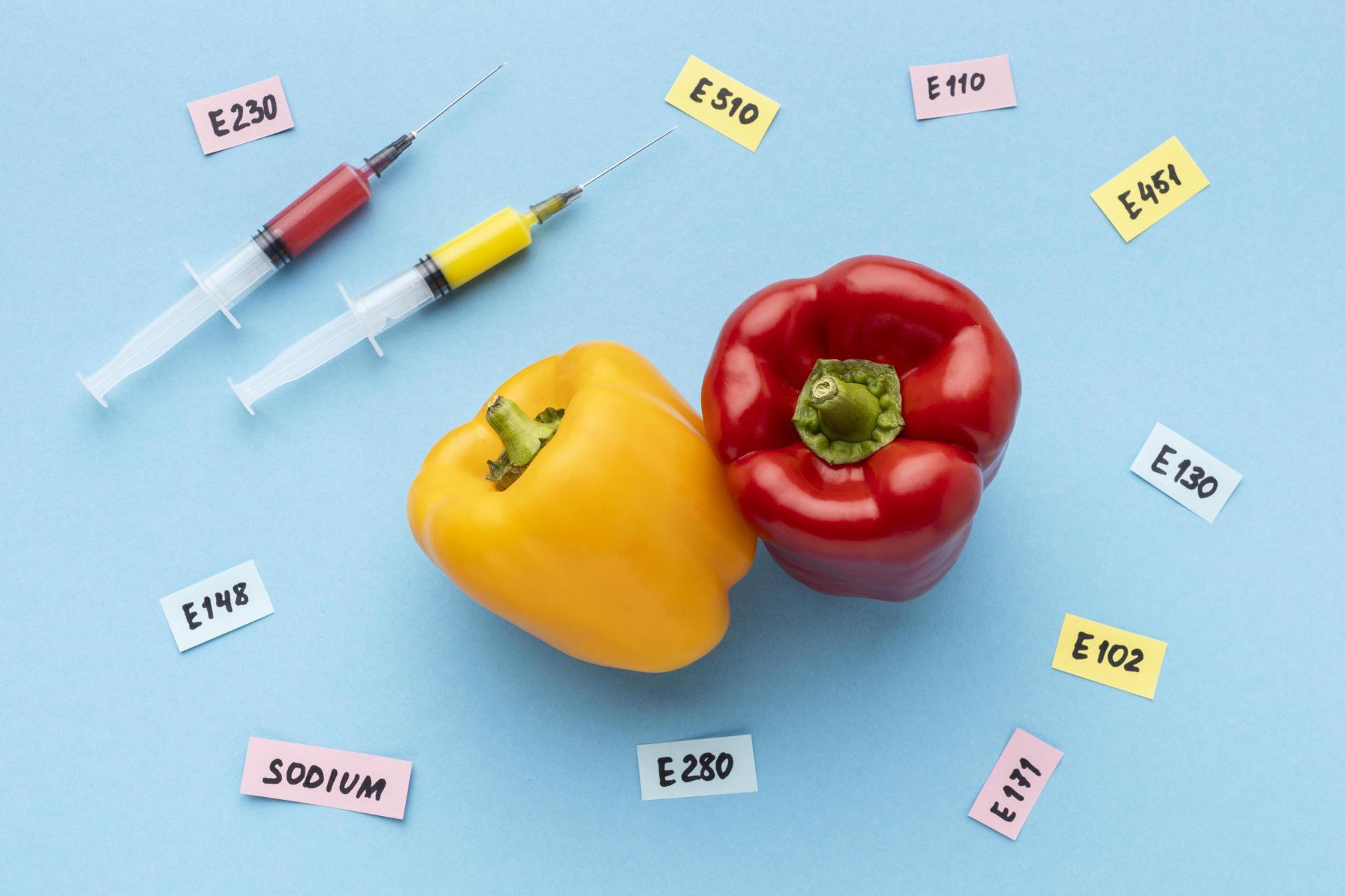
Several permitted food colours in India — including Tartrazine (E102), Sunset Yellow (E110), and Allura Red (E129) — have oestrogen-mimicking properties identified in cell culture and animal studies. These are widely used in packaged snacks, beverages, pickles, and confectionery consumed daily by Indian families.
The Conditions Being Driven by Endocrine Disruption
- Male Infertility: Indian men are experiencing a fertility crisis. A 2023 study published in the journal Human Reproduction Update found sperm counts have fallen by over 50% globally since 1973 — with the sharpest recent decline in non-Western nations, including India. Dietary OP and OC pesticide exposure is among the most robustly documented contributing factors.
- PCOS (Polycystic Ovary Syndrome): PCOS now affects approximately 20% of Indian women of reproductive age. Insulin resistance, elevated androgen levels, and disrupted ovulation are the hallmarks. Endocrine-disrupting pesticides are identified environmental risk factors in the Indian PCOS research literature.
- Thyroid Disorders: India has one of the world’s highest rates of thyroid dysfunction — an estimated 4.2 crore Indians have thyroid disease. OP pesticides disrupt thyroid hormone synthesis and transport, causing fatigue, weight gain, depression, and infertility.
- Precocious Puberty: The average age of onset of puberty in Indian girls has been falling for two decades. Exposure to oestrogen-mimicking chemicals is the primary environmental driver, which is associated with significantly elevated breast cancer risk.
The Pregnancy and Foetal Development Window
The most critical exposure window is during the first trimester of pregnancy, when every organ system of the foetus — including the entire endocrine system — is being formed from a handful of cells. Chemical disruption of hormonal signalling during this window can permanently alter the foetus’s hormonal architecture, with effects that manifest throughout life: altered puberty timing, impaired fertility, elevated disease risk. Studies of Indian women show that blood and adipose tissue levels of organochlorine pesticides are associated with preterm birth, low birth weight, gestational diabetes, and neonatal hypothyroidism. These are not rare outcomes. They are among the most common pregnancy complications in India.
The food you eat directly shapes your hormonal health and your fertility. QuickTrolly — zero pesticides, chemical-free food, PAN India delivery. www.quicktrolly.in